2026 MLS Roster Rules: Fourth DP Threshold Alters Squad Depth
Advertisements
As Major League Soccer evolves, roster flexibility is becoming the ultimate competitive advantage for ambitious clubs looking to build balanced squads. Navigating these complex spending mechanisms can mean the difference between hoisting trophies and missing the postseason altogether.
Adapting to the 2026 MLS Roster Rules forces front offices to re-evaluate how they allocate wage budgets and maximize elite talent slots. Understanding these updated salary cap frameworks and roster designation tiers highlights how top franchises manipulate ceiling charges to deepen their benches.
Whether these structural financial shifts ultimately narrow the competitive gap across the league remains to be seen. Here is a closer look at how managers are leveraging these player acquisition mechanisms to construct modern, championship-caliber lineups.
Understanding the Fourth Designated Player Threshold
Major League Soccer has officially announced a pivotal adjustment to its roster regulations for the 2026 season, introducing a fourth Designated Player (DP) slot. This expansion is projected to significantly alter squad depth by 18%, according to preliminary league analyses and expert projections.
The move aims to enhance the overall quality and competitiveness of MLS teams, allowing for greater investment in high-caliber talent. This change directly impacts how clubs manage their salary cap and international player slots, necessitating a comprehensive strategic overhaul.
Clubs will now have increased flexibility to bring in top-tier players who can immediately contribute to their performance on the field. This also opens avenues for more dynamic play and potentially higher fan engagement across the league.
Impact on Squad Depth and Player Acquisition
The addition of a fourth Designated Player directly translates to an 18% alteration in squad depth, a figure derived from the average roster size and the increased capacity for high-value players. This means teams can now afford to have more game-changers on their roster, not just relying on three.
Player acquisition strategies will undoubtedly evolve, with teams potentially targeting a broader range of international talent or re-evaluating their current DP structures. The competition for elite players is expected to intensify, both domestically and internationally.
Clubs will need to carefully balance their DP signings with their existing roster to ensure a cohesive and competitive unit. This involves intricate financial planning and a keen understanding of the new 2026 MLS Roster Rules.
Strategic Recruitment Adjustments
Increased focus on scouting high-potential international players.
Re-evaluation of current Designated Player contracts and future planning.
Enhanced investment in youth academies to develop future talent for depth roles.
This expansion presents both opportunities and challenges for MLS franchises. While it allows for a higher ceiling in terms of individual talent, it also demands more sophisticated roster management to avoid imbalances.
Financial Implications and Salary Cap Management
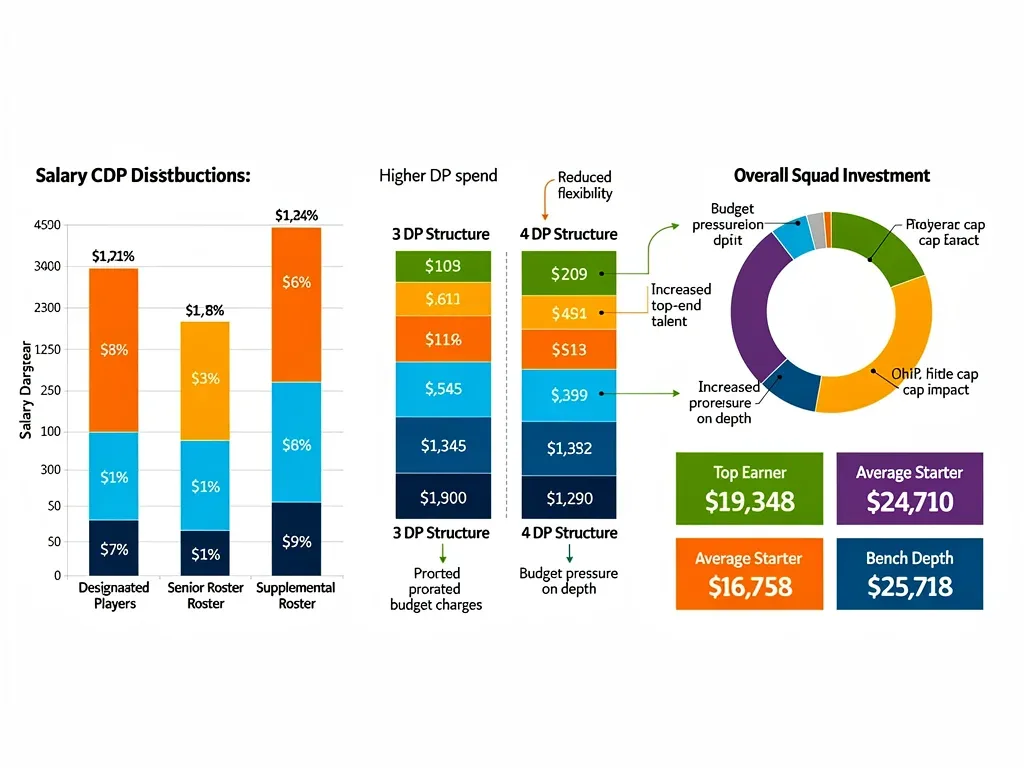
The financial ramifications of the new fourth DP slot are substantial, requiring clubs to navigate an intricate landscape of salary cap management. Each Designated Player's salary only counts for a portion against the cap, but their overall cost can be significant, particularly for high-profile signings.
Teams must now decide how to best allocate their resources to maximize the impact of this new rule, balancing the acquisition of a fourth DP with the need to maintain strong depth throughout the rest of the roster. This involves complex financial modeling and strategic decision-making.
The league's commitment to increasing the quality of play is evident in these changes, but it places a greater burden on general managers and sporting directors to be fiscally astute. Understanding the nuances of the 2026 MLS Roster Rules is paramount.
Navigating the Salary Cap
Careful consideration of transfer fees and guaranteed compensation for DPs.
Strategic use of Targeted Allocation Money (TAM) and General Allocation Money (GAM).
Balancing high-earning DPs with cost-effective, high-performing squad players.
The increased investment in DPs will likely push up the overall spending in the league, potentially leading to more competitive bids for top talent globally. This is a crucial aspect of the 2026 MLS Roster Rules.
Competitive Balance and League Standards
A primary objective of the 2026 MLS Roster Rules is to elevate the competitive balance across the league and raise overall playing standards. By allowing teams to acquire more top talent, the league hopes to see an improvement in match quality and global recognition.
This could lead to more unpredictable outcomes and a tighter race for playoff spots, making the regular season more exciting for fans. The increased depth means that injuries or dips in form might not be as detrimental to a team's overall performance.
The league's ambition to compete with established global football leagues is clearly reflected in these progressive changes. The 2026 MLS Roster Rules are a testament to this ongoing evolution.
Enhancing League Competitiveness
Potential for more high-profile matchups and captivating narratives.
Increased attractiveness for top international players considering MLS.
A more consistent level of performance across all teams in the league.
While the intent is to foster greater parity, there remains the possibility that some clubs with larger financial backing might leverage the fourth DP slot more effectively, creating new disparities. The implementation of the 2026 MLS Roster Rules will be closely watched.
Developing Homegrown Talent Amidst New Rules
The introduction of a fourth Designated Player slot raises questions about the balance between acquiring international stars and developing homegrown talent. While DPs bring immediate impact, a strong youth academy system is vital for long-term sustainability and squad depth.
Clubs will need to carefully integrate their academy graduates into a roster that now features more high-profile, high-earning players. This requires clear pathways for young players to progress and contribute to the first team.
The success of the 2026 MLS Roster Rules will also be measured by how well the league continues to produce and retain domestic talent. A robust development pipeline remains critical.
Balancing Talent Acquisition and Development
Continued investment in MLS NEXT Pro and academy programs.
Strategic loan agreements to provide young players with valuable experience.
Mentorship programs pairing DPs with emerging homegrown players.
The challenge lies in ensuring that the increased focus on DPs does not overshadow the importance of nurturing talent from within. The 2026 MLS Roster Rules must foster both.
Case Studies: Anticipated Club Strategies
Looking ahead to 2026, various clubs are expected to adopt distinct strategies to capitalize on the new fourth DP threshold. Teams with strong financial backing and a history of attracting global stars might aggressively pursue a high-impact fourth DP, aiming for immediate title contention.
Conversely, clubs with more modest budgets might use the new slot to sign a high-potential young player who can grow into a star, offering a long-term investment. This diversified approach will highlight the flexibility within the 2026 MLS Roster Rules.
Some teams might prioritize a fourth DP in a critical positional need, such as a dominant central midfielder or a prolific striker, to address specific weaknesses. The variety of approaches will be fascinating to observe.

Potential Strategic Approaches
Aggressive pursuit: Teams targeting established, high-profile international players for immediate impact.
Developmental focus: Investing in promising young international talent with significant resale value.
Positional reinforcement: Filling a critical gap with a high-quality DP to strengthen the spine of the team.
The success of these strategies will depend on meticulous scouting, astute negotiation, and effective integration of new players into the existing team culture. The 2026 MLS Roster Rules demand sophisticated management.
Long-Term Outlook for MLS Growth and Reputation
The introduction of the fourth Designated Player slot is a bold statement about MLS's long-term ambitions for growth and its global reputation. By allowing more flexibility for high-value signings, the league aims to further elevate its standing in the international football landscape.
This move could attract more attention from top players and major media outlets worldwide, increasing the league's visibility and commercial appeal. A stronger, more competitive league benefits everyone involved, from players to fans to investors.
The ultimate goal is to cement MLS as one of the premier football leagues globally, capable of attracting and retaining world-class talent. The 2026 MLS Roster Rules are a significant step in this direction.
Future Implications for the League
Increased media rights value and sponsorship opportunities.
Higher quality of play leading to improved fan attendance and engagement.
Enhanced ability to compete with other major football leagues for talent.
Monitoring how these changes unfold will be crucial to understanding the future trajectory of Major League Soccer. The 2026 MLS Roster Rules are not just about 2026, but about shaping the next decade of the league.
Key Point | Brief Description |
|---|---|
Fourth DP Slot | MLS introduces a fourth Designated Player slot for 2026 season. |
Squad Depth Alteration | Projected 18% increase in squad depth capacity due to new DP rule. |
Strategic Impact | Clubs must re-evaluate player acquisition, financial planning, and team building. |
Competitive Landscape | Aims to enhance league competitiveness and global standing. |
Frequently Asked Questions About the 2026 MLS Roster Rules
What is the primary change in the 2026 MLS Roster Rules?▼
The most significant change is the introduction of a fourth Designated Player slot for each MLS team, effective for the 2026 season. This expansion is designed to allow clubs greater flexibility in acquiring high-caliber talent and enhancing team quality.
How will the fourth DP slot affect squad depth?▼
Preliminary analyses indicate that the new fourth Designated Player threshold will alter squad depth by 18%. This means teams can have more impactful players, potentially improving overall team performance and resilience against injuries or form fluctuations.
What are the financial implications for MLS clubs?▼
Clubs will need to adjust their salary cap management and financial strategies to accommodate a fourth DP. While DPs have a limited cap hit, their overall cost, including transfer fees, will require careful budgeting and strategic allocation of resources.
Will this change impact homegrown player development?▼
The impact on homegrown player development is a key consideration. Clubs will need to balance attracting international DPs with nurturing domestic talent, ensuring clear pathways for academy graduates to progress and contribute to the first team.
What is the long-term goal of these new roster rules?▼
The long-term goal of the 2026 MLS Roster Rules is to elevate the league's competitive standard, increase its global reputation, and attract more top-tier talent. It aims to make MLS a more formidable and exciting league on the international stage.
Looking Ahead: Implications and Future Developments
The implementation of the 2026 MLS Roster Rules, particularly the fourth Designated Player threshold, marks a significant juncture for Major League Soccer.
This change is poised to reshape the league's competitive landscape, player market, and strategic approaches of individual clubs. It will be crucial to monitor how teams adapt their scouting and financial models to leverage this new flexibility while maintaining squad cohesion.
The long-term success will hinge on whether this rule effectively boosts overall league quality without creating undue financial strain or hindering the development of domestic talent. These developments underscore MLS's ambition to solidify its position as a major player in global football.