36-Club League Phase: +7 Goal Differential Secures Round of 16 in 2026
Is your club fighting for a direct knockout spot in European football's newly transformed single-table format? Navigating the expanded 36-Club League Phase has turned goal margin into the ultimate tiebreaker, where a +7 goal differential now marks the magic threshold for automatic Round of 16 qualification.
In this high-stakes 36-team single-table structure, late goals in blowout matches carry as much weight as late game-winners. Elite clubs can no longer coast through final matchdays, as every strike across all eight fixture rounds directly impacts seeding and eliminates dangerous play-off round ties.
Understanding how fine goal margins dictate top-eight qualification reshapes how managers approach tactical setups and goal-scoring aggression. Here is how goal differential became the decisive key to surviving European football's new format.
Understanding the New 36-Club League Phase Format
The 2026 Champions League introduces a significant overhaul, moving from the traditional group stage to a single league phase featuring 36 clubs. This format aims to increase competitive matches and create more compelling narratives throughout the early stages of the tournament.
Under this new structure, clubs play eight matches against different opponents, four at home and four away. The cumulative results from these matches determine a unified league table, from which teams advance to the knockout stages.
This shift places a greater emphasis on consistent performance across a broader range of fixtures, making every goal scored and conceded potentially critical. The overall goal differential becomes a key tie-breaker and a direct pathway to progression.
The Pivotal Role of Goal Differential in 2026 Qualification
In the fiercely contested 36-Club League Phase, a +7 goal differential emerged as the benchmark for automatic Round of 16 qualification. This metric highlights the fine margins that separate progression from elimination, even for teams with similar points totals.
Teams that managed to achieve this impressive goal differential demonstrated superior attacking prowess combined with solid defensive organization. It wasn't just about winning matches, but about winning them convincingly.
This scenario underscores how teams must now approach every single match with an aggressive yet balanced strategy. Every goal has value, not only for securing points but also for building a crucial goal differential advantage in the 36-Club League Phase.
Strategic Implications for Team Management
The emphasis on goal differential fundamentally alters tactical approaches, encouraging clubs to seek larger victories when opportunities arise. Coaches must balance offensive ambition with defensive solidity, knowing that a single late goal conceded could have significant repercussions.
Player substitutions, late-game tactics, and even squad rotation decisions are now influenced by the need to maintain or improve goal differential. This adds another layer of complexity to an already demanding competition.
Aggressive attacking play even when leading.
Prioritizing clean sheets and defensive discipline.
Utilizing substitute players to impact goal difference.
Considering goal differential in head-to-head scenarios.
Case Study: The Team That Secured Qualification with +7 GD
One prominent example from the 2026 36-Club League Phase illustrates the power of a +7 goal differential. Despite finishing with a comparable points tally to several other clubs, this team's superior goal difference propelled them directly into the Round of 16.
Their journey through the league phase was marked by several high-scoring victories, notably a 4-0 win against a formidable opponent, which significantly boosted their metric. These results were not anomalies but the product of a deliberate strategy.
This performance serves as a clear blueprint for future contenders, demonstrating that simply accumulating points is no longer sufficient. Maximizing goal scoring opportunities and minimizing concessions is paramount for success in the 36-Club League Phase.
Key Matches and Turning Points
Several matches proved instrumental in building this team's impressive goal differential. Early-season fixtures where they secured dominant wins laid the foundation, allowing them a buffer in tighter contests.
Crucially, they avoided heavy defeats, maintaining a strong defensive record even in matches they didn't win. This consistency across both ends of the pitch was fundamental to their success in the 36-Club League Phase.
Opening match 3-0 victory setting an early tone.
Mid-phase 4-0 home win against a direct rival.
Maintaining a clean sheet in two away fixtures.
Analyzing the Impact on Lower-Ranked Teams
For teams positioned lower in the 36-Club League Phase table, the importance of goal differential is equally profound. While a +7 might secure automatic qualification, a negative differential can mean the difference between a playoff spot and elimination.
Teams vying for the intermediate playoff positions (9th to 24th) must also consider their goal differential as a critical tie-breaker. Every point and every goal becomes a battle, influencing their seeding and potential opponents.
This creates a more dynamic and unpredictable league phase, where teams cannot afford to relax at any point in a match. The pressure to perform consistently, both offensively and defensively, is immense for all participants in the 36-Club League Phase.
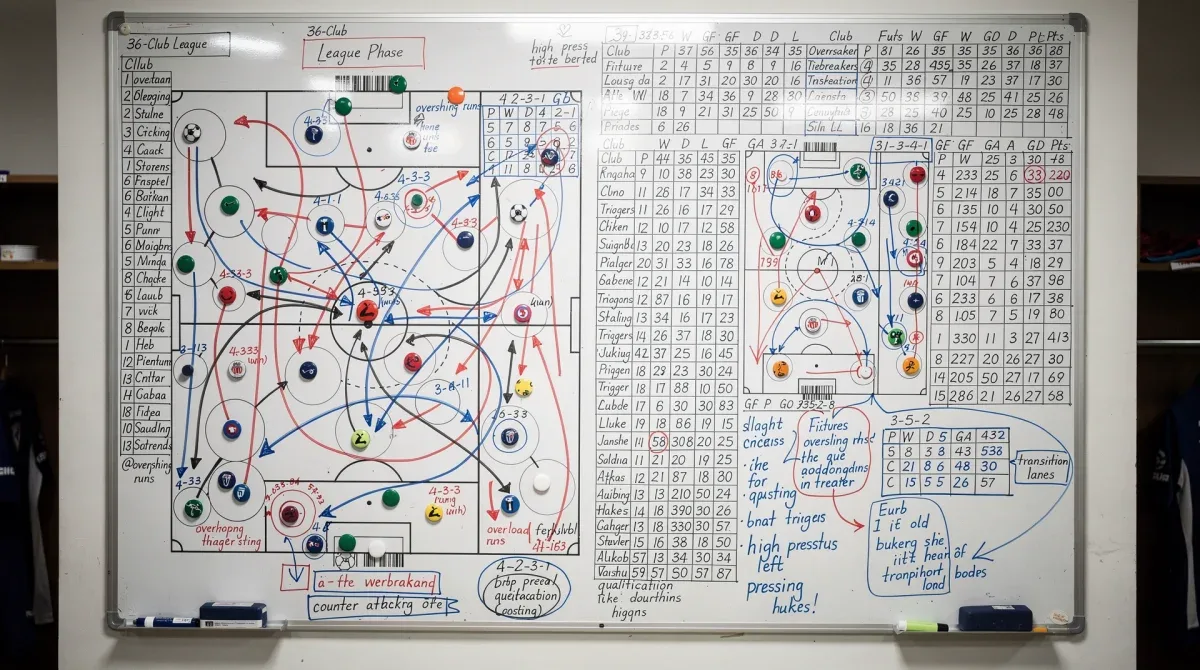
Comparisons to Previous Champions League Formats
The shift to the 36-Club League Phase and the heightened importance of goal differential marks a significant departure from previous Champions League iterations. Historically, group stage qualification often relied more heavily on head-to-head records or simple points totals.
Under the old format, teams could sometimes afford to play conservatively in certain matches if they had already secured enough points or favorable head-to-head results. The new structure demands a more proactive approach in every single game.
This evolution reflects UEFA's desire to inject more excitement and competitive intensity into the initial stages of its premier club competition. The 36-Club League Phase is designed to reward sustained excellence across multiple metrics.
Why Goal Differential Gained Prominence
With an expanded league table and more teams playing a diverse set of opponents, a direct head-to-head comparison becomes less feasible as a primary tie-breaker. Goal differential offers a more universal and objective measure of a team's overall performance.
It encourages attacking football while still valuing defensive solidity, promoting a balanced approach to the game. This metric provides a clear, quantifiable measure of a team's dominance or struggle throughout the 36-Club League Phase.
Elimination of traditional group stage head-to-head rules.
Need for a universal tie-breaker across diverse fixtures.
Incentivizing offensive play and large winning margins.
Anticipated Future Trends and Adaptations
As clubs adapt to the demands of the 36-Club League Phase, we can expect to see significant changes in team strategies and squad constructions. Investment in versatile forwards and robust defensive units will likely increase.
Coaches will need to become even more adept at managing game situations to maximize goal opportunities and protect leads. The ability to score late goals or prevent late concessions will be highly valued.
The 2026 season has set a precedent, and future campaigns will undoubtedly see teams specifically targeting a strong goal differential from the outset of the 36-Club League Phase. This will lead to an even more exciting and high-stakes competition.
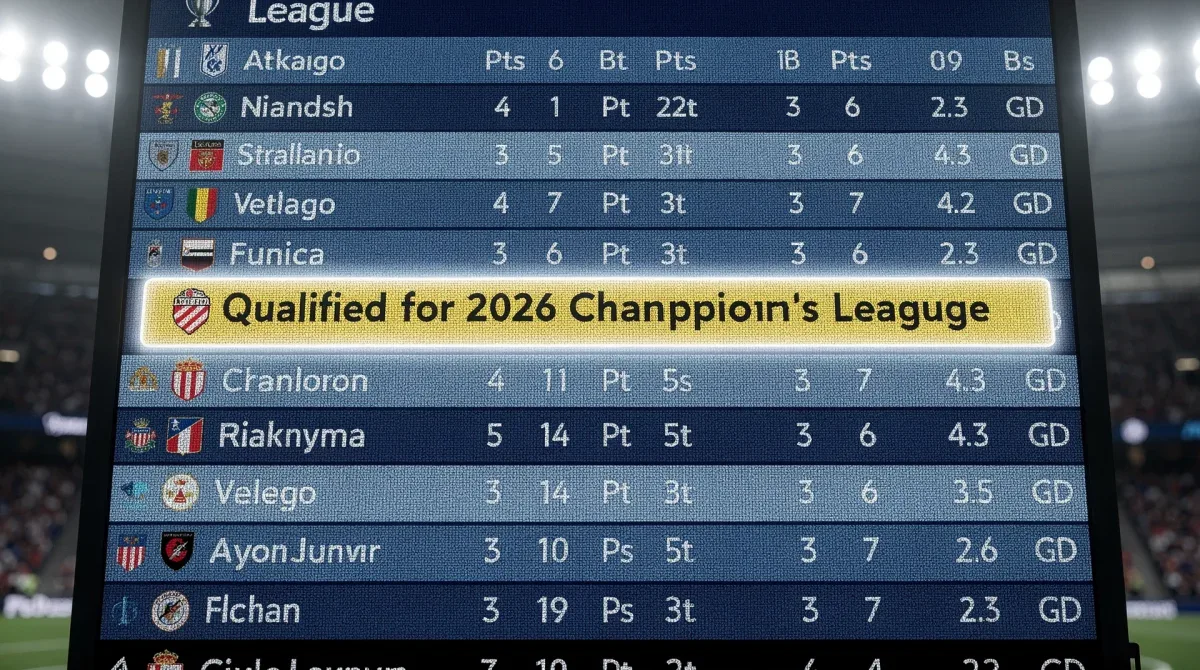
The Role of Data Analytics in Goal Differential Strategies
The increasing importance of goal differential in the 36-Club League Phase has amplified the role of data analytics in modern football. Clubs are now leveraging advanced metrics to fine-tune their strategies and optimize performance.
Analysts provide insights into opponent weaknesses, optimal attacking patterns, and defensive vulnerabilities, all with the aim of boosting goal differential. This data-driven approach is becoming indispensable for competitive advantage.
From expected goals (xG) to defensive pressing metrics, every piece of data is scrutinized to identify areas where a team can improve its net goal count. This scientific approach is critical for success in the evolving 36-Club League Phase.
Key Point | Brief Description |
|---|---|
New Format | 36-Club League Phase replaces traditional groups in 2026. |
+7 GD Importance | A +7 goal differential secured direct Round of 16 qualification. |
Strategic Shifts | Teams prioritize aggressive offense and strong defense. |
Data Analytics | Crucial for optimizing goal differential in the new format. |
Frequently Asked Questions About the 36-Club League Phase
What is the 36-Club League Phase?▼
The 36-Club League Phase is the new format for the Champions League starting in 2026, replacing the traditional group stage. All 36 participating clubs compete in a single league table, playing eight matches against different opponents to determine progression to the knockout rounds.
Why is goal differential so important now?▼
With the expanded 36-Club League Phase, goal differential has become a primary tie-breaker and a direct pathway to automatic qualification for the Round of 16. It rewards teams for not just winning, but winning decisively, and maintaining strong defensive records across all matches.
How many teams qualify automatically for the Round of 16?▼
The top eight teams in the 36-Club League Phase table qualify automatically for the Round of 16. Teams ranked 9th to 24th then enter a playoff round to determine the remaining eight spots, making goal differential critical for direct entry.
Will this format encourage more attacking football?▼
Yes, the emphasis on goal differential in the 36-Club League Phase is expected to encourage more attacking football. Teams will be incentivized to score more goals and secure larger winning margins, rather than settling for narrow victories, to improve their standing.
What does this mean for team strategies?▼
Team strategies will need to adapt significantly. Coaches will focus on balancing aggressive offense with solid defense, using data analytics to identify scoring opportunities and prevent concessions. Every match in the 36-Club League Phase will be treated as crucial for building goal differential.
Impact and Implications
The 2026 Champions League 36-Club League Phase, with its heightened emphasis on goal differential, marks a new era for European club football. The success of teams securing automatic Round of 16 qualification with a +7 goal differential provides a clear precedent.
This shift demands more comprehensive strategies, where every goal counts, shaping how clubs approach recruitment, tactics, and match management. Fans can anticipate more thrilling, high-stakes encounters as teams vie for every possible advantage in this evolving competition.