High-Press Systems: Champions League 2026 Survival & Counter-Attack Rise
Advertisements
Surviving against modern transition tactics requires elite football managers to refine their off-the-ball structures and defensive rest-prophylaxis. Implementing aggressive High-Press Systems in European football helps top-tier squads pin opponents deep, disrupt build-up play, and force high-turnover scoring opportunities.
However, elite tacticians are increasingly exploiting aggressive frontline squeezing through rapid vertical transitions and lightning-fast breakaways. Modern counter-attacking setups utilize surgical direct passing and unselfish off-ball runs to bypass overextended pressing traps and punish open defensive spaces.
Rebalancing pressing intensity with structured defensive balance will decide European knockout success this season. Here is how elite tactical analysts view the evolution of transition football and the rise of counter-attacking efficiency in elite European competition.
The Evolving Landscape of Champions League Tactics
The tactical landscape of the Champions League is in constant flux, with high-press systems dominating elite football for nearly a decade. However, recent data suggests a significant shift, challenging the very foundation of these aggressive approaches.
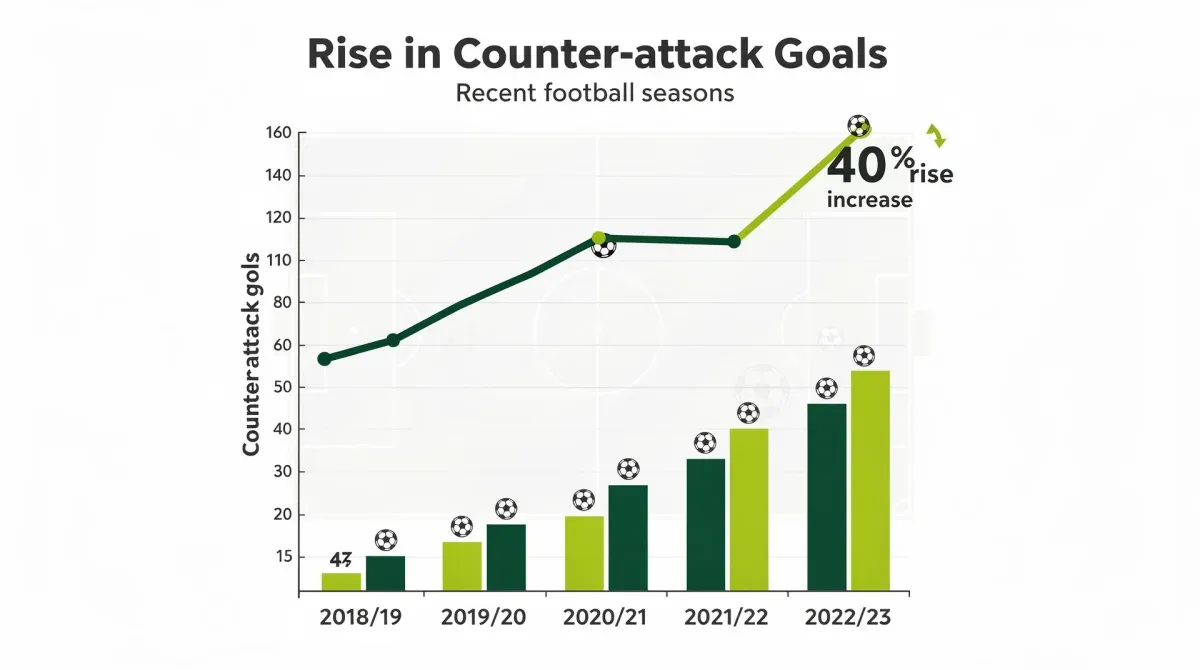
A notable 40% rise in counter-attack goals in top European competitions highlights a growing vulnerability for teams employing high-press systems. This trend forces a re-evaluation of defensive strategies and player profiles ahead of the 2026 Champions League knockouts.
Clubs and coaches are now intensely scrutinizing how to maintain offensive intensity without exposing themselves to devastating counter-attacks. The balance between aggression and defensive solidity has never been more precarious, impacting team selection and in-game adjustments.
The Rise of Counter-Attacks: A Statistical Breakdown
Recent statistical analyses confirm a stark increase in successful counter-attacking moves, particularly against teams committed to a high press. This surge is not merely anecdotal; it reflects a systemic adaptation by opponents.
The 40% rise in counter-attack goals can be attributed to several factors, including faster transitions, more direct passing, and forwards with exceptional pace and clinical finishing. These elements combine to punish any momentary lapse in a high-press system.
Data from the last two seasons shows that teams are increasingly comfortable absorbing initial pressure, then exploiting the vast spaces left behind high defensive lines. This tactical evolution presents a formidable challenge for those who rely heavily on winning the ball back high up the pitch.
Challenges for High-Press Systems in 2026
The 2026 Champions League knockouts will likely serve as a crucible for high-press systems, determining their long-term viability at the elite level. The margin for error in these high-stakes matches is minimal, making defensive vulnerabilities even more pronounced.
Teams that fail to adapt their high-press strategies risk being consistently exposed by well-drilled counter-attacking sides. The intensity and speed required to execute a successful high press for 90 minutes, across multiple knockout rounds, is an immense physical and mental burden.
Furthermore, the increasing quality of individual players capable of breaking lines with a single pass or dribble adds another layer of complexity. These players can dismantle a meticulously organized press with moments of individual brilliance, turning defense into attack in seconds.
Adapting High-Press Systems: Tactical Adjustments
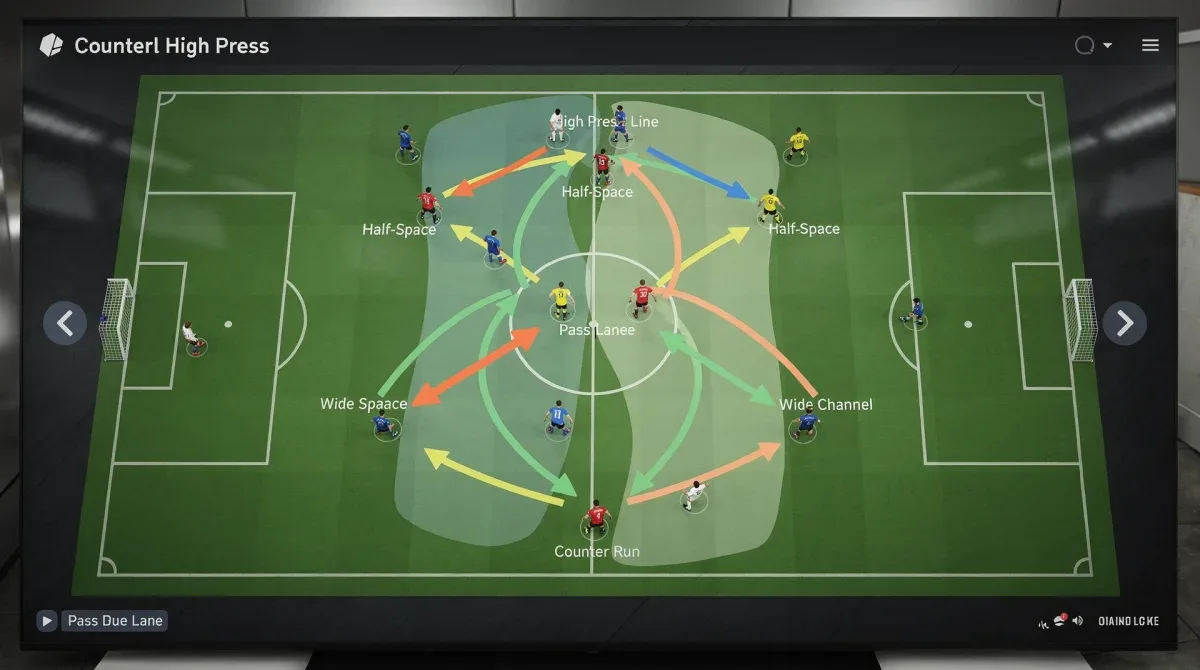
To survive and thrive, high-press systems must undergo significant tactical adjustments, moving beyond a rigid, one-size-fits-all approach. Flexibility and adaptability will be paramount for teams aiming for Champions League glory.
One key adaptation involves intelligent pressing triggers, where the press is initiated only in specific zones or under certain conditions, rather than a constant, all-out assault. This conserves energy and reduces the risk of being caught out of position.
Another crucial adjustment is the role of the holding midfielder and central defenders, who must be quicker to recognize and react to counter-attacking threats. Their ability to cover space and intercept passes is vital in mitigating the impact of a broken press.
Player Profiles and Recruitment for Evolving Tactics
The changing tactical landscape directly impacts player recruitment strategies, with clubs now prioritizing specific attributes to counter the rise of quick transitions. The ideal player for a high-press system in 2026 might look different from previous years.
Midfielders with exceptional recovery pace, tactical intelligence, and strong tackling abilities are becoming increasingly valuable. These players can both contribute to the press and drop back quickly to protect the defense against rapid counter-attacks.
Defenders, particularly full-backs, need to possess not only defensive prowess but also the stamina to cover large areas and participate in offensive overloads. The demand for versatile, physically robust, and tactically astute players will only intensify.
The Role of Defensive Midfielders
Crucial for screening the defense and breaking up counter-attacks early.
Must possess excellent positional awareness and intercepting skills.
Expected to initiate quick transitions after winning possession.
The ability of attackers to press effectively from the front, forcing errors and winning the ball back, remains critical. However, their defensive responsibilities now extend to tracking back and providing support when the press is bypassed, highlighting the need for a cohesive team effort.
The Impact of Technology and Data Analytics
Technology and data analytics are playing an increasingly important role in understanding and refining high-press systems, as well as in identifying vulnerabilities. Clubs are investing heavily in these areas to gain a competitive edge.
Advanced metrics can pinpoint exactly where a press is most vulnerable, allowing coaches to tailor training sessions and tactical plans. This data-driven approach helps optimize player positioning, pressing intensity, and recovery runs.
Furthermore, video analysis tools enable detailed study of opponents' counter-attacking patterns, allowing teams to anticipate and neutralize threats more effectively. The synergy between human coaching and technological insights is crucial for the future of high-press systems.
Analyzing Counter-Attack Triggers
Identifying specific moments or passes that lead to opponent counter-attacks.
Understanding player fatigue patterns that create defensive gaps.
Using heatmaps and tracking data to assess defensive coverage during transitions.
The continuous feedback loop provided by data allows for real-time adjustments and long-term strategic planning. This analytical edge is indispensable for teams navigating the complexities of modern football, especially with the 40% rise in counter-attack goals.
Case Studies: Teams Adapting to the New Reality
Several top European clubs are already demonstrating innovative approaches to adapt their high-press systems in response to the growing counter-attack threat. Their strategies offer valuable insights into the future of tactical football.
Some teams are experimenting with a more flexible press, alternating between high intensity and a mid-block depending on the opponent and game state. This allows them to conserve energy and reduce exposure to long balls over the top.
Others are focusing on rapid defensive transitions, with specific training drills dedicated to quickly reforming defensive shapes immediately after losing possession. This proactive approach aims to smother counter-attacks before they can gather momentum, showcasing a refined high-press system.
Looking Ahead: High-Press Systems and the 2026 Champions League
The 2026 Champions League knockouts will undoubtedly be a fascinating tactical battleground, testing the resilience and adaptability of high-press systems. The teams that best integrate defensive solidity with offensive aggression will likely emerge victorious.
The narrative of football tactics is constantly evolving, and the current trend of increased counter-attack goals signals a new chapter. Coaches must continue to innovate, finding new ways to apply pressure without becoming overly vulnerable.
Ultimately, the survival of high-press systems hinges on their capacity to evolve, incorporating lessons from the recent surge in counter-attacking success. The future of elite football promises a dynamic interplay between aggressive pressing and sophisticated counter-attacking strategies.
Key Point | Brief Description |
|---|---|
Counter-Attack Rise | 40% increase in counter-attack goals challenges high-press systems. |
Tactical Adaptation | Teams must evolve pressing strategies to mitigate defensive risks. |
Player Recruitment | Emphasis on versatile, fast, and tactically intelligent players. |
Data Analytics | Technology crucial for identifying vulnerabilities and refining tactics. |
Frequently Asked Questions About High-Press Systems
Why are counter-attack goals increasing against high-press systems?▼
The rise in counter-attack goals is primarily due to improved opposition tactics, faster transitions, and players with exceptional pace exploiting the large spaces left behind high defensive lines. Teams are becoming more adept at bypassing the initial press and launching quick, incisive attacks.
How can high-press systems adapt to this new challenge?▼
Adaptations include implementing more intelligent pressing triggers, where the press is selective rather than constant. Teams are also focusing on rapid defensive transitions, with midfielders and defenders quickly covering space and reforming defensive shapes immediately after possession is lost.
What role does player recruitment play in this tactical evolution?▼
Player recruitment is shifting towards individuals with high tactical intelligence, exceptional recovery pace, and versatility. Midfielders who can both press and defend deep, along with robust defenders capable of covering vast areas, are becoming highly sought after to ensure high-press systems survival 2026.
Will high-press systems become obsolete by 2026?▼
It is unlikely that high-press systems will become obsolete. Instead, they are evolving. The 2026 Champions League will likely showcase more refined, flexible, and adaptive pressing strategies that balance aggression with defensive security, proving high-press systems can survive.
How do data analytics contribute to tactical adjustments?▼
Data analytics provide crucial insights into pressing vulnerabilities and opponent counter-attacking patterns. This information helps coaches fine-tune player positioning, pressing intensity, and recovery runs, allowing for data-driven tactical refinements to bolster high-press systems.
Impact and Implications
The discussion around High-Press Systems highlights a pivotal moment in football tactics. The continuous evolution demands that teams remain agile and innovative, constantly reassessing their strategies against emerging threats.
The upcoming Champions League campaigns will serve as a definitive test, shaping the future of elite football and determining which tactical approaches will prevail in an increasingly dynamic sport.