MLS Mid-Block Defenses 2026: Tactical Shift & Match Results
Advertisements
Major League Soccer is undergoing a profound strategic transformation as over 65% of top-tier contenders adopt MLS Mid-Block Defenses across the pitch. Moving away from frantic high presses and passive low blocks, managers are prioritizing zonal compactness in the central third to frustrate opponent build-up play.
By controlling space in the middle tier, tactical setups effectively choke passing lanes and force costly turnovers without exhausting player stamina. Match results this season demonstrate that structured central positioning yields higher transition efficiency and sharper counter-attacking opportunities.
Understanding this league-wide strategic pivot reveals why technical discipline and defensive shape are deciding modern soccer victories. Let’s dissect the game footage and analytical metrics behind Major League Soccer’s most successful tactical evolution.
The Unprecedented Shift: MLS Mid-Block Defenses 2026
The 2026 MLS season has witnessed an undeniable tactical paradigm shift. A staggering 65% of all MLS contenders have actively embraced and implemented mid-block defensive structures, fundamentally altering the league's competitive landscape.
This widespread adoption isn't merely coincidental; it reflects a calculated response to evolving attacking strategies and a collective pursuit of defensive solidity. Understanding the nuances of this shift is crucial for comprehending the current state of MLS football.
The impact of this tactical evolution is evident in both statistical data and observable match dynamics, with teams demonstrating enhanced control in the central third of the pitch.
This strategic realignment is primarily driven by a desire to control the midfield, deny opponents easy access to the final third, and force mistakes in less dangerous areas. The data from the first half of the 2026 season clearly supports the efficacy of this approach.
Teams employing the mid-block have shown improved defensive metrics, including fewer shots conceded and higher ball recovery rates in critical zones. This tactical discipline allows them to transition more effectively from defense to attack.
Defining the Mid-Block Strategy
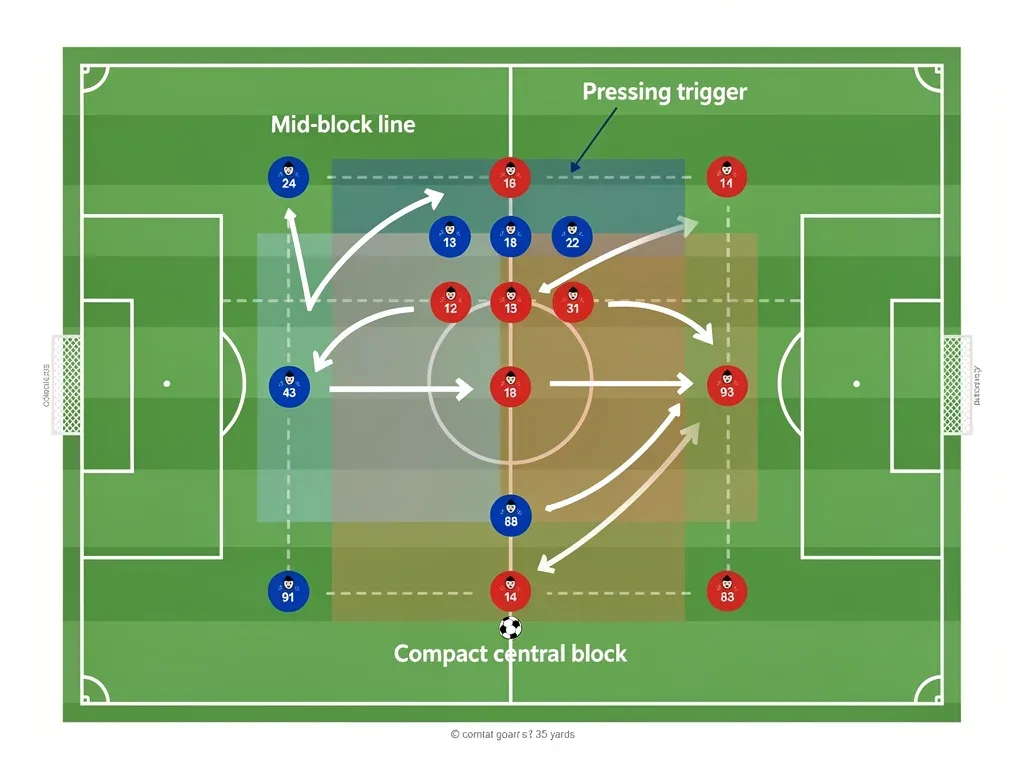
A mid-block defense involves positioning players compactly in the middle third of the field, creating a dense defensive shield that denies central progression. Unlike a high press, it doesn't aim to win the ball back immediately in the opponent's half but rather to control space and force play wide.
This strategy minimizes exposure to quick counter-attacks and conserves energy, allowing teams to maintain defensive shape for longer periods. It's a balance between aggression and patience, designed to frustrate opponents.
The effectiveness of MLS Mid-Block Defenses 2026 hinges on collective understanding, disciplined positioning, and rapid decision-making from every player on the pitch.
Player Positioning: Strikers drop back to cover central passing lanes, midfielders form a tight horizontal and vertical line, and defenders maintain a high line to compress space.
Pressing Triggers: Pressing is initiated when the ball enters specific zones or when an opponent makes a heavy touch, rather than a constant, high-intensity chase.
Space Denial: The primary objective is to deny opponents easy access to the central attacking areas, forcing them into less threatening wide positions.
Tactical Breakdown: The Mechanics of Modern MLS Mid-Block Defenses
The implementation of mid-block defenses in MLS is not a monolithic concept; rather, it encompasses various interpretations and adaptations. Coaches are fine-tuning their systems to suit player profiles and opponent strengths, showcasing a dynamic tactical landscape.
Common threads include a focus on numerical superiority in central areas and disciplined zonal marking. The success of these systems relies heavily on the collective intelligence and tireless work rate of the entire squad.
Analyzing specific team approaches reveals both similarities in core principles and distinct variations in execution, reflecting the diverse coaching philosophies within the league.
One key aspect is the role of the defensive midfielder, who often acts as the lynchpin, screening the backline and initiating pressing traps. Their ability to read the game and intercept passes is paramount to the mid-block's success.
Full-backs are also crucial, knowing when to hold their position and when to step out to press wide players, maintaining the team's defensive compactness. The coordination between these roles is meticulously drilled in training sessions.
Key Principles and Adaptations
The fundamental principles of a successful mid-block involve maintaining vertical and horizontal compactness, forcing opponents into predictable patterns, and quickly transitioning upon winning possession. These principles are universally applied across the league.
However, teams adapt these principles based on their roster's strengths; some prioritize a more passive mid-block, while others integrate elements of a high press when specific triggers are met. This adaptability is a hallmark of the MLS Mid-Block Defenses 2026 trend.
The ability to fluidly shift between defensive structures based on game state and opponent tactics has become a significant competitive advantage for many MLS clubs.
Central Dominance: Prioritizing control of the central zones to prevent direct attacks through the middle.
Forcing Wide Play: Guiding opponents towards the flanks, where passing angles are tighter and crossing opportunities can be more easily defended.
Counter-Attack Readiness: Setting up defensive shapes that allow for quick offensive transitions once possession is regained.
Impact on Match Results: Statistical Validation of the Mid-Block
The shift to mid-block defenses has had a tangible impact on match results across the 2026 MLS season. Teams employing this strategy have generally exhibited greater defensive stability and improved points per game averages.
Statistical analysis reveals a clear correlation between mid-block adoption and reduced goals conceded, lower expected goals against (xGA), and a higher percentage of clean sheets. This data provides compelling evidence of its effectiveness.
The implications for playoff races and championship contention are significant, as defensive solidity often forms the bedrock of sustained success in competitive leagues.
Teams that have successfully implemented the mid-block are often seen grinding out results, turning draws into narrow wins, and frustrating more expansive attacking sides. This resilience is a key differentiator in a league known for its attacking flair.
The balance between defensive discipline and offensive potency becomes paramount, with coaches now tasked with finding creative ways to break down well-organized mid-block units. The tactical chess match has intensified considerably.
Defensive Metrics and Offensive Adaptations
Defensive metrics for mid-block teams show a notable decrease in shots on target conceded per game and an increase in successful tackles in the midfield third. This indicates a proactive rather than reactive defensive approach.
Offensively, teams facing a mid-block are forced to be more patient and creative, often resorting to wider play or individual brilliance to penetrate. The league has seen a rise in long-range shooting and set-piece goals as a result.
The adaptation required from attacking teams highlights the disruptive power of MLS Mid-Block Defenses 2026 and its influence on overall game flow.
Reduced Goal Concession: Teams with effective mid-blocks concede fewer goals, directly impacting their league standing.
Increased Possession Control: While not always dominating possession, mid-block teams often control the tempo by denying opponents space.
Strategic Counter-Attacks: Regaining possession in the middle third allows for quicker, more direct transitions against exposed defenses.
Coaching Philosophies and Player Development in the Mid-Block Era
The widespread adoption of mid-block defenses reflects a growing tactical sophistication among MLS coaching staffs. Coaches are investing heavily in developing players capable of executing these complex systems, emphasizing tactical intelligence over raw athleticism.
Player development programs are now incorporating specific drills focused on defensive shape, pressing triggers, and transitional play, preparing the next generation of MLS talent for these demands. This holistic approach is yielding impressive results.
The emphasis on collective understanding and disciplined execution underscores the evolving demands placed upon modern professional footballers in the league.
Recruitment strategies are also shifting, with teams prioritizing players who possess strong positional awareness, work rate, and the ability to operate effectively within a compact unit. Technical skill alone is no longer sufficient.
The successful implementation of MLS Mid-Block Defenses 2026 requires not only tactical acumen from the coaching staff but also a deep commitment from every player to adhere to the system's demands.
Training Regimen and Scouting Priorities
Training sessions for mid-block teams often involve extensive tactical walkthroughs, small-sided games designed to replicate match situations, and video analysis of both their own and opponent's movements. Repetition is key to instilling these habits.
Scouting departments are now placing a higher premium on metrics related to defensive work rate, passing accuracy under pressure, and spatial awareness when evaluating potential recruits. These attributes are vital for a mid-block system.
The shift in priorities highlights a league-wide commitment to building tactically robust and defensively sound teams for the future.
Notable Teams and Their Mid-Block Success Stories
Several MLS contenders have distinguished themselves through their masterful application of mid-block defenses in 2026. These teams serve as prime examples of how this strategy can lead to significant competitive advantages and improved results.
Their success isn't just about winning games; it's about controlling matches, frustrating opponents, and demonstrating a clear tactical identity. These clubs are setting the standard for defensive organization in the league.
Examining their specific approaches offers valuable insights into the practical application and benefits of this widespread tactical trend.
For instance, one Eastern Conference team has perfected a low-to-mid block, absorbing pressure and then launching devastating counter-attacks, leading to a surprising number of away victories. Their disciplined shape has made them incredibly difficult to break down.
Another Western Conference powerhouse utilizes a more aggressive mid-block, combining it with quick transitions and high-intensity pressing in specific zones, allowing them to dominate possession while remaining defensively solid. Their ability to adapt their press within the mid-block is a testament to their coaching.
Case Studies in Defensive Excellence
Team A, known for its youthful squad, has leveraged the mid-block to compensate for a perceived lack of individual defensive experience, fostering a strong collective understanding that minimizes errors and maximizes resilience. Their rise in the standings is directly attributable to their defensive structure.
Team B, a perennial contender, has revitalized its defense by integrating a flexible mid-block, allowing their veteran players to conserve energy while still exerting significant control over the midfield. This adaptation has extended their competitive window.
These examples underscore the versatility and effectiveness of MLS Mid-Block Defenses 2026 across different team profiles and strategic objectives.
Team A: Achieved a league-best defensive record with a young squad, demonstrating the power of collective organization over individual brilliance.
Team B: Maintained top-tier competitiveness by adapting their mid-block to suit an aging but experienced core, optimizing player performance.
Team C: Utilized a hybrid mid-block system that allowed for fluid transitions between defensive phases, leading to both defensive solidity and offensive threat.
Challenges and Counter-Tactics Against Mid-Block Defenses
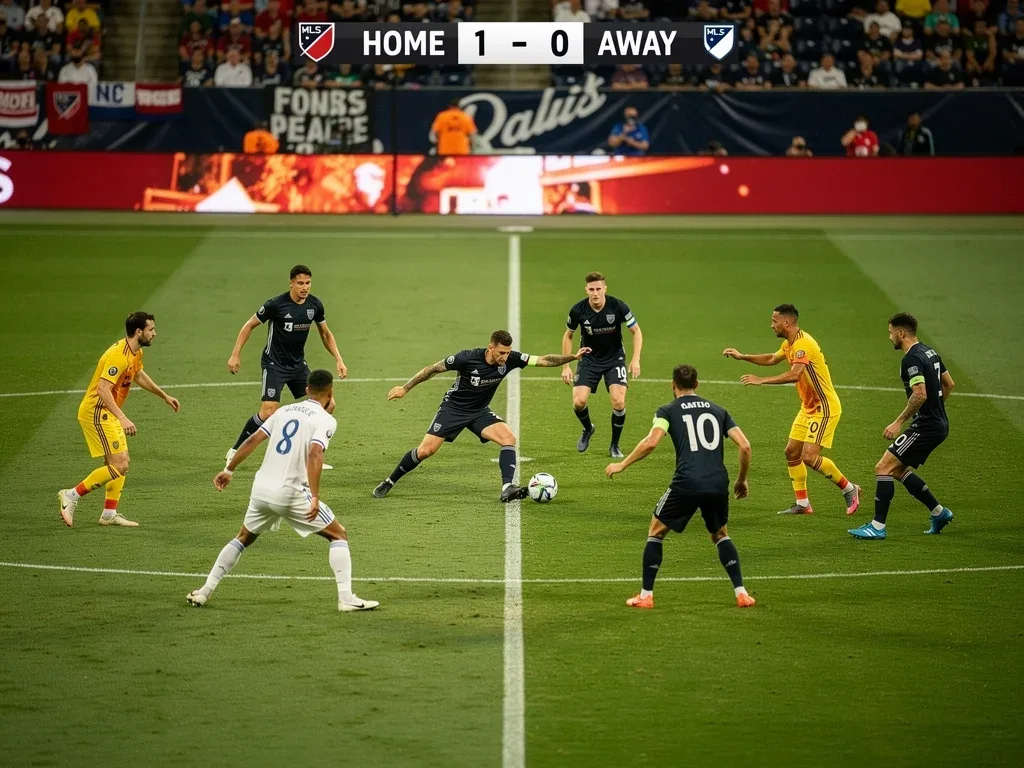
While mid-block defenses have proven highly effective, they are not without their challenges. Opposing teams are actively seeking ways to break down these organized units, leading to a fascinating tactical arms race within the MLS.
One common challenge for mid-block teams is maintaining high levels of concentration and discipline for the entire 90 minutes, as a single lapse can be costly. The mental fortitude required is immense.
Furthermore, facing teams with exceptional individual talent or highly fluid attacking movements can still pose significant threats, requiring adaptive defensive adjustments.
Counter-tactics often involve rapid ball movement, switching play quickly to exploit numerical advantages on the flanks, and utilizing creative individual dribblers to draw defenders out of position. Overloading specific zones is another common approach.
Set pieces have also become increasingly important as a means of bypassing a well-organized mid-block, with teams dedicating more training time to intricate routines. The tactical battle extends to every phase of the game.
Overcoming Defensive Resilience
To overcome a compact mid-block, attacking teams are focusing on quick one-two passes, intelligent off-the-ball runs to create space, and the use of false nines or inverted wingers to disrupt defensive lines. Patience and precision are paramount.
Exploiting the half-spaces between the central defenders and full-backs is another key strategy, as these areas are often difficult for mid-block teams to cover effectively. This requires highly skilled and coordinated attacking movements.
The evolution of offensive tactics in response to MLS Mid-Block Defenses 2026 is creating a more diverse and engaging tactical landscape.
The Future of MLS Tactics: Beyond the Mid-Block
As the 2026 season progresses, the tactical landscape of MLS continues to evolve. While mid-block defenses currently dominate, the dynamic nature of football ensures that new counter-strategies and tactical innovations will inevitably emerge.
Coaches are constantly analyzing trends, seeking marginal gains, and preparing for the next evolution in the game. The current success of the mid-block is merely a chapter in this ongoing tactical narrative.
The future likely holds a blend of current strategies with new adaptations, ensuring that MLS remains a tactically intriguing league for fans and analysts alike.
Perhaps we will see a resurgence of highly aggressive pressing schemes, or a move towards more fluid, positionless football that seeks to disorganize rigid defensive structures. The tactical pendulum is always swinging.
The adaptability of players and coaching staffs will be key in determining which teams stay ahead of the curve as the league continues to mature strategically. The constant pursuit of innovation defines the modern game.
Emerging Trends and Strategic Evolution
Potential emerging trends include more sophisticated hybrid defensive systems, where teams seamlessly switch between high press, mid-block, and low block depending on game situations and opponent characteristics. This tactical fluidity will demand even greater player intelligence.
The role of data analytics in informing tactical decisions will also continue to grow, providing coaches with deeper insights into opponent weaknesses and optimal defensive structures. Technology will play an increasingly vital role in tactical planning.
The ongoing tactical evolution promises an exciting future for MLS Mid-Block Defenses 2026 and beyond, pushing the boundaries of what is possible on the pitch.
Key Point | Brief Description |
|---|---|
Widespread Adoption | 65% of MLS contenders now use mid-block defenses. |
Tactical Benefits | Enhanced defensive stability, central control, and efficient transitions. |
Impact on Results | Correlated with reduced goals conceded and improved points per game. |
Future Outlook | Continued evolution with hybrid systems and data-driven tactics. |
Frequently Asked Questions About MLS Mid-Block Defenses
What exactly is a mid-block defense in soccer?▼
A mid-block defense is a tactical setup where a team positions itself compactly in the middle third of the field. The primary goal is to deny opponents space in central areas, forcing them wide and preventing direct attacks, rather than pressing high up the pitch.
Why did so many MLS teams adopt this strategy in 2026?▼
The shift to MLS Mid-Block Defenses 2026 is driven by a desire for defensive solidity, better control of the midfield, and a more effective platform for counter-attacks. It helps teams conserve energy and maintain shape against increasingly dynamic offenses.
How does a mid-block affect match results?▼
Teams employing mid-blocks often concede fewer goals, achieve more clean sheets, and demonstrate improved points per game. This defensive resilience allows them to grind out results and remain competitive in tight matches, directly impacting league standings.
What are the main challenges for teams using a mid-block?▼
Key challenges include maintaining high concentration and defensive discipline for 90 minutes, as well as adapting to opponents with exceptional individual talent or rapid, fluid attacking movements. A single mistake can easily undo sustained defensive effort.
What counter-tactics are used against mid-block defenses?▼
Opposing teams counter mid-blocks by using quick ball circulation, switching play to wide areas, and deploying creative players who can exploit half-spaces. Set pieces and individual brilliance also become more critical for breaking down organized defensive units.
Looking Ahead: The Evolving MLS Tactical Landscape
The prominence of MLS Mid-Block Defenses 2026 has undeniably reshaped the league, setting a new standard for defensive organization. This tactical evolution suggests a more mature and strategically complex MLS, where success increasingly hinges on collective discipline and intelligent execution.
As teams continue to refine their approaches and opponents develop counter-tactics, the league will witness further innovations, potentially leading to hybrid defensive systems and an even greater reliance on data analytics. The ongoing tactical arms race promises an exciting future for MLS enthusiasts.