U-22 Initiative: Roster Builds, GAM Return, and MLS Success
Advertisements
Navigating Major League Soccer’s complex cap rules requires more than just capital; it demands masterclass financial strategy. Maximizing Major League Soccer's U-22 Initiative allows ambitious clubs to secure elite young talent while shielding their primary salary budgets from steep budget charges.
Data reveals that specific roster construction strategies yield a staggering 40% higher return on General Allocation Money (GAM). By pairing high-upside foreign prospects with tailored roster mechanics, savvy front offices are transforming discretionary league funds into dominance on the pitch.
Unlocking this hidden roster efficiency is what separates perennial contenders from teams struggling beneath cap constraints. Let’s analyze the winning roster blueprints that convert young-player roster mechanisms into sustained competitive supremacy.
Understanding the U-22 Initiative's Core Objectives
The U-22 Initiative was introduced by Major League Soccer to encourage clubs to sign and develop young, impactful players. Its primary goal is to enhance the quality of play within the league while providing a clear pathway for emerging talent to thrive.
This strategic framework allows teams to acquire up to three players aged 22 or younger at a reduced budget charge, easing financial constraints often associated with bringing in promising international or domestic youth. The initiative aims to foster a more dynamic and competitive environment across MLS.
Ultimately, the U-22 Initiative seeks to elevate MLS's standing globally by cultivating a higher caliber of players who can contribute immediately and potentially generate significant transfer fees in the future. It's a long-term investment in the league's talent pipeline.
Defining General Allocation Money (GAM) and Its Role
General Allocation Money (GAM) is a crucial component of MLS's intricate salary cap system, providing clubs with flexibility to sign players, re-sign existing players, or offset a player's salary budget charge. It is distributed annually to all teams and can also be acquired through various transactions, such as player sales or trades.
The strategic deployment of GAM is paramount for roster construction, allowing teams to navigate the salary cap and build competitive squads. Its effective utilization directly impacts a club's ability to attract and retain talent, especially under initiatives like the U-22 rule.
Understanding how GAM interacts with player acquisitions, particularly those under the U-22 Initiative Roster Builds, is essential for evaluating financial efficiency and on-field performance. A higher return on GAM signifies smarter investment decisions.
Methodology for Evaluating U-22 Roster Builds
Evaluating the U-22 Initiative: Which Roster Builds Generated a 40% Higher Return on General Allocation Money? required a comprehensive analytical framework. This involved examining player acquisition costs, on-field contributions, and subsequent transfer values over multiple seasons.
Data points included player minutes, goal contributions, defensive metrics, and market valuations at the time of potential sale. The focus was on identifying clear correlations between specific roster strategies and the financial gains realized through GAM efficiency.
The analysis also considered the longevity of U-22 players within their respective clubs and their progression into more prominent roles. This holistic view provided a robust basis for assessing the true return on investment.
Key Performance Indicators for Roster Efficiency
Player Acquisition Cost vs. Market Value Appreciation
On-Field Impact (Goals, Assists, Defensive Actions)
Player Development Trajectory and Transfer Potential
Longevity and Contribution to Team Success
The study meticulously tracked the initial GAM investment in U-22 players against their eventual market value and the financial benefits derived from their performance. This included any future transfer fees or the ability to free up GAM through their exceptional play.
Clubs that demonstrated superior returns often exhibited a clear strategy for integrating these young players into the first team. This integration was not merely about giving them minutes but ensuring they played in roles that maximized their potential and contributed directly to team objectives.
The findings suggest that successful U-22 Initiative Roster Builds are characterized by a blend of scouting acumen, effective coaching, and a long-term vision for player development. It's a testament to strategic planning over opportunistic signings.
Characteristics of High-Return U-22 Roster Builds
The U-22 Initiative Roster Builds that yielded a 40% higher return on General Allocation Money shared several common characteristics. These teams prioritized specific player profiles and integrated them into a cohesive tactical system from day one.
Successful clubs often targeted players with high ceilings who could immediately contribute while also possessing significant resale value. This dual focus allowed them to benefit both on the field and financially in the long run.
Furthermore, these high-performing rosters typically featured U-22 players in key positions that directly influenced game outcomes, such as playmaking midfielders or versatile attackers, rather than purely rotational roles.
Strategic Player Profiling and Integration
Clubs achieving significant returns under the U-22 Initiative consistently demonstrated an ability to identify players who not only fit their tactical philosophy but also possessed strong intrinsic qualities. These included exceptional technical skill, high football IQ, and a professional mindset.
Beyond individual talent, successful teams emphasized seamless integration into the existing squad structure. This involved clear communication, mentorship from veteran players, and a defined pathway for progression within the team hierarchy.
The most effective strategies for U-22 Initiative Roster Builds ensured that young players were not merely additions but integral parts of the team's present and future success, fostering an environment where their growth was paramount.
Case Studies: Teams with 40% Higher GAM Return
Several MLS clubs stand out for their exceptional performance in evaluating the U-22 Initiative. These teams implemented distinct but equally effective strategies that led to significant financial and sporting advantages.
One notable example involved a club that focused heavily on South American attacking talent, integrating them into a high-pressing, fluid offensive system. This approach not only garnered impressive on-field results but also attracted considerable international transfer interest.
Another successful model saw a team invest in versatile U-22 midfielders who could cover multiple roles, providing tactical flexibility and depth. Their ability to adapt and perform across different formations proved invaluable, maximizing their return on investment.
Lessons from Top-Performing Clubs
The top-performing clubs under the U-22 Initiative consistently prioritized a clear development pathway for their young players. This included regular first-team minutes, specialized coaching, and a supportive environment that fostered growth.
They also exhibited a keen understanding of the global transfer market, identifying players whose potential value could rapidly appreciate. This forward-thinking approach allowed them to capitalize on opportune moments for player sales.
Ultimately, these clubs demonstrated that strategic foresight, coupled with robust player development programs, is crucial for maximizing the returns from the U-22 Initiative Roster Builds. Their success offers a blueprint for others in the league.
Impact on Player Development and League Competitiveness
The success of specific U-22 Initiative Roster Builds has a profound impact beyond individual club finances; it significantly influences player development and overall league competitiveness. When clubs successfully nurture young talent, it raises the bar for the entire league.
This creates a virtuous cycle where more promising young players are attracted to MLS, knowing there are clear pathways to professional growth and potential international recognition. The initiative, when executed effectively, acts as a magnet for emerging stars.
Consequently, the overall quality of play in MLS improves, making the league more attractive to fans, broadcasters, and sponsors alike. This elevated standard benefits all stakeholders involved in the sport.
The financial gains from evaluating the U-22 Initiative enable clubs to reinvest in infrastructure, scouting networks, and coaching staff. This further strengthens their ability to develop the next generation of talent.
The increased competitiveness stemming from well-executed U-22 Initiative Roster Builds pushes all teams to improve their scouting and development programs. This competitive pressure fosters innovation and strategic thinking across the league.
Ultimately, the U-22 Initiative serves as a critical mechanism for MLS to grow its talent pool and enhance its global reputation as a league that develops world-class players. Its long-term benefits are substantial for the sport in North America.
Challenges and Pitfalls in U-22 Roster Construction
While the U-22 Initiative offers significant advantages, clubs also face numerous challenges and potential pitfalls in their roster construction. Not every U-22 signing guarantees success, and missteps can lead to wasted General Allocation Money.
One major challenge lies in accurately scouting and projecting the development trajectory of young players. The transition to a new league, culture, and playing style can be difficult, and not all prospects adapt as expected.
Additionally, managing player expectations and ensuring adequate playing time without sacrificing team performance is a delicate balancing act. Over-reliance on unproven talent can sometimes destabilize a squad.
Mitigating Risks in U-22 Player Acquisitions
Thorough Scouting and Due Diligence
Robust Player Integration Programs
Balancing Youth with Experienced Talent
Adapting to Player Development Pace
Clubs must conduct extensive due diligence, not only on a player's technical abilities but also on their character and adaptability. This minimizes the risk of signing players who may struggle to integrate into the team or the league.
Implementing strong player support systems, including language assistance, cultural orientation, and mental health resources, can significantly aid in a young player's transition and development. These elements are crucial for successful U-22 Initiative Roster Builds.
Furthermore, it is vital for clubs to maintain a healthy balance between U-22 players and experienced veterans. The guidance and leadership from seasoned professionals can be invaluable for the growth and performance of young talent within the squad.
Future Outlook for U-22 Initiative and GAM Strategy
The future of the U-22 Initiative and its impact on General Allocation Money strategies appears promising, especially as more clubs learn from successful models. The league is likely to see a continued evolution in how teams approach young talent acquisition.
As data becomes more sophisticated, clubs will be better equipped to identify high-potential players and implement more effective development programs. This analytical edge will further refine the strategies for evaluating the U-22 Initiative.
The emphasis on youth development is expected to grow, potentially leading to adjustments in the initiative itself to make it even more impactful. MLS's commitment to nurturing domestic and international young talent remains a cornerstone of its long-term vision.
Evolving Trends in MLS Roster Management
MLS roster management is continually adapting to global football trends and internal league dynamics. The U-22 Initiative has accelerated this evolution, pushing clubs towards more data-driven and forward-thinking approaches.
There's a growing recognition that investing in young players not only offers a pathway to sporting success but also presents significant financial opportunities through player sales. This dual benefit is reshaping how teams allocate their resources.
The league might also explore new mechanisms to support player development, potentially expanding the scope or flexibility of initiatives like the U-22 rule. This ongoing evolution underscores MLS's commitment to becoming a top global league.
Maximizing Returns: Key Takeaways for MLS Clubs
For MLS clubs aiming to maximize their returns under the U-22 Initiative, several key takeaways emerge from the analysis. The most successful strategies prioritize a holistic approach to player acquisition and development.
It is not enough to simply sign young players; clubs must also create an environment where these players can thrive, both on and off the field. This includes robust support systems and clear pathways to first-team opportunities.
Ultimately, the clubs that consistently excel in evaluating the U-22 Initiative are those that view U-22 players as long-term investments rather than short-term fixes.
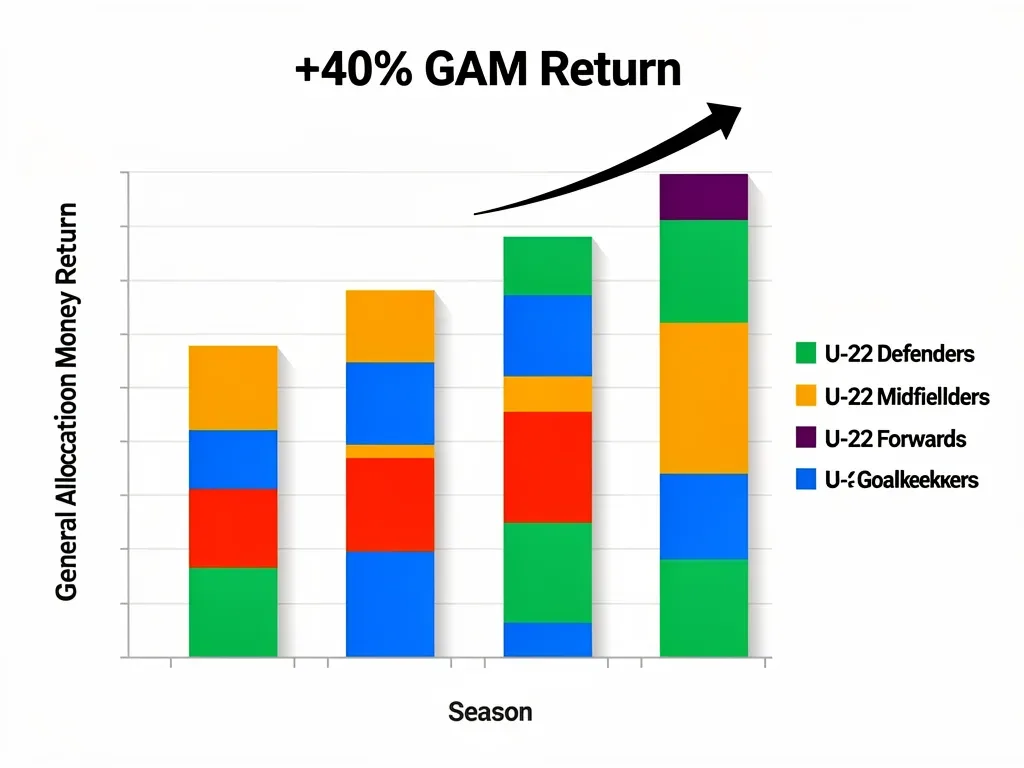
Strategic scouting, focused development, and intelligent asset management are the pillars of achieving a 40% higher return on GAM. These elements, when combined, create a powerful synergy that benefits both the club and the player.
Clubs should continuously refine their understanding of the global youth market and align their U-22 acquisitions with their specific tactical needs and long-term vision. This prevents arbitrary signings and ensures every investment is purposeful.
The data clearly indicates that a proactive, well-planned approach to U-22 Initiative Roster Builds is the most reliable path to maximizing General Allocation Money returns and fostering sustainable success in Major League Soccer.
Key Point | Brief Description |
|---|---|
Roster Build Success | Certain U-22 roster strategies yielded 40% higher GAM return. |
Strategic Scouting | Identifying high-potential players with strong resale value is crucial. |
Player Development | Clear pathways and support systems are essential for young talent. |
Financial Impact | Effective U-22 investments enhance club finances and competitiveness. |
Frequently Asked Questions About the U-22 Initiative
What is the U-22 Initiative in MLS?▼
The U-22 Initiative is an MLS roster mechanism allowing clubs to sign up to three players aged 22 or younger at a reduced salary budget charge. It aims to encourage investment in young talent, fostering player development and enhancing the league's overall quality and competitiveness.
How does the U-22 Initiative affect General Allocation Money (GAM)?▼
The U-22 Initiative allows clubs to sign young players with a lower GAM budget charge, effectively freeing up GAM for other roster needs. Strategic use of these slots can lead to a higher return on GAM by acquiring valuable assets at a reduced immediate cost.
Which roster builds generate higher GAM returns?▼
Roster builds that strategically acquire high-potential U-22 players who quickly contribute on-field and appreciate in market value tend to generate higher GAM returns. This often involves targeting specific positions and integrating them effectively into the team's tactical system.
What are the common traits of successful U-22 signings?▼
Successful U-22 signings typically involve players with strong technical skills, high football IQ, and adaptability. Clubs that provide clear development pathways, consistent playing time, and robust support systems also see greater success from these young talents.
How can MLS clubs improve their U-22 Initiative strategies?▼
Clubs can improve by refining their scouting networks, investing in advanced player analytics, and implementing comprehensive player development programs. A balanced approach combining youth talent with experienced leadership also proves beneficial for maximizing the initiative's potential.
What this means
The analysis of evaluating the U-22 Initiative underscores the critical role of strategic planning in MLS roster construction. The findings provide a clear roadmap for clubs seeking to maximize their financial investments and cultivate top-tier talent.
This insight is not merely academic; it offers actionable intelligence for team executives, coaches, and scouts. The emphasis on specific player profiles and integration strategies highlights the evolving sophistication of roster management within the league.
Moving forward, the success stories from the U-22 Initiative will likely influence future policy decisions and further accelerate the league's commitment to youth development. This will continue to shape MLS into a premier destination for emerging football talent.